Catch Big Makos and Threshers Just Minutes From The Hudson River Mouth

- Details
- Category: Fishing Articles
- Published: Wednesday, 20 April 2016 08:45
- Written by Gary Caputi - Saltwater Sportsman
- Hits: 48011
SHARKS OF NEW YORK BIGHT
Catch Big Makos and Threshers Just Minutes From The Hudson River Mouth.
With the sun finally shinning and temperatures fast on the rise, droves of beachgoers head to the Hamptons, Long Island and the Jersey Shore. But not far from the beaches, apex predators, many of them giants weighing hundreds of pounds, cruise, looking for a meal. Starting in late spring, sharks, including makos and threshers of impressive proportions, invade New York Bight, affording anglers an edgier type of big-game action: one where the target species are not only endowed with formidable strength and endurance but also powerful jaws with rows of razor-sharp teeth.

THE THOROUGHFARE
New York Bight hosts a variety of pelagics that use the massive channel to come and go across the continental shelf with the seasons. An abundance of sharks and the forage they pursue travel that ancient submarine highway scoured by the Hudson River at the end of the last ice age, turning the area into a world-class shark-fishing destination.
“Makos and threshers show up the first week of June,” says Glen Kapoosuzian, perennial shark tournament winner and skipper of Reel Games, a charter boat out of Freeport, New York. “Early fishing centers around Chicken Canyon, Glory Hole, Mudhole and nearby wrecks. It all begins when the water hits 57 degrees, and things get better as the temperature rises. I’ve caught many of my biggest sharks in early June, including a 591-pound thresher and a 594-pound mako.”
DANGEROUS QUARRY: Makos, the fastest shark species, known for its high-speed runs and amazing somersaults, and threshers, aggressive, bullish and almost as acrobatic, are headliners in the Bight. Threshers have become more prevalent over the past 10 or 15 years, yet makos, once the mainstay of the New York Bight fishery, remain plentiful.

Both track down prey from long distances by picking up scent dispersed by the water, so chumming is equally productive for either species. But their hunting tactics couldn’t be more different. While makos rely on their speed and daggerlike chompers to kill or severely injure during the initial attack, threshers use their long tail fins to incapacitate prey with powerful blows before circling back to devour the stunned victims.
ESSENTIAL FACTORS: Water temperature plays a key role in the arrival of early-season sharks. The larger ones, which have the greatest temperature tolerance, are usually first on the scene, and some stick around until November. “Temperature is the most important thing,” Kapoosuzian claims. “I use SST charts to find spots with water at least 57 degrees. Nearby temp breaks and structure peak my interest, but it’s a home run when you find bluefish. My best days have always come when there’s bluefish around the boat.” Both the whiptails and makos arrive at about the same time, trailing the early influx of bluefish, so it stands to reason that the best bait is fresh bluefish, especially small ones you can rig whole. Kapoosuzian works with local commercial fishermen and fish markets to get the freshest and carries plenty on each trip because there are times when you go through scads of ravenous blue sharks while waiting for a big mako or thresher to show.
 So... another winter has come and gone, (hopefully). As the ground thaws and the back bays start to warm up into the high 40's and low 50's the elusive Morone saxatilis a.k.a Striped Bass begins to in habit these waters which were just frigid and bare weeks ago. This is the beginning of their yearly migration and its time to take your shot at landing one of these beautiful fish.
 you see the flicker of the rod tip. Don't let excitement get the best of you. Running to the the rod haphazardly grabbing it out of the holder and immediately swinging for the fences will almost guarantee you've missed your opportunity. When you see the rod "go off" yes you'll want to get it in your hand quickly, but thats it just get it in your hand. Let the fish tell you what its doing, often the bass will inhale the bait and go but this is not always the case. Some days they are a little hesitant on taking the bait and decide to play around with it, you can feel this going on but resist the temptation to swing. When you feel a steady pull and can see your line stretched its time to set the hook.
 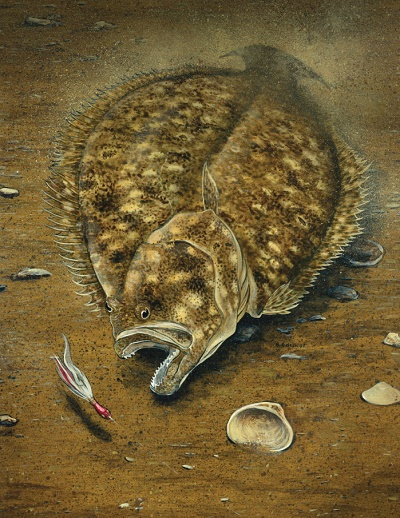 It is always wise to try to understand the migration pattern of any species you target. Right now a majority of the fluke population is offshore, mostly just inshore of the canyon edges anywhere from 40 to 85 miles offshore. Fluke spawn offshore in these deep waters where they will spawn several times during the course of their offshore foray, mostly in the early winter